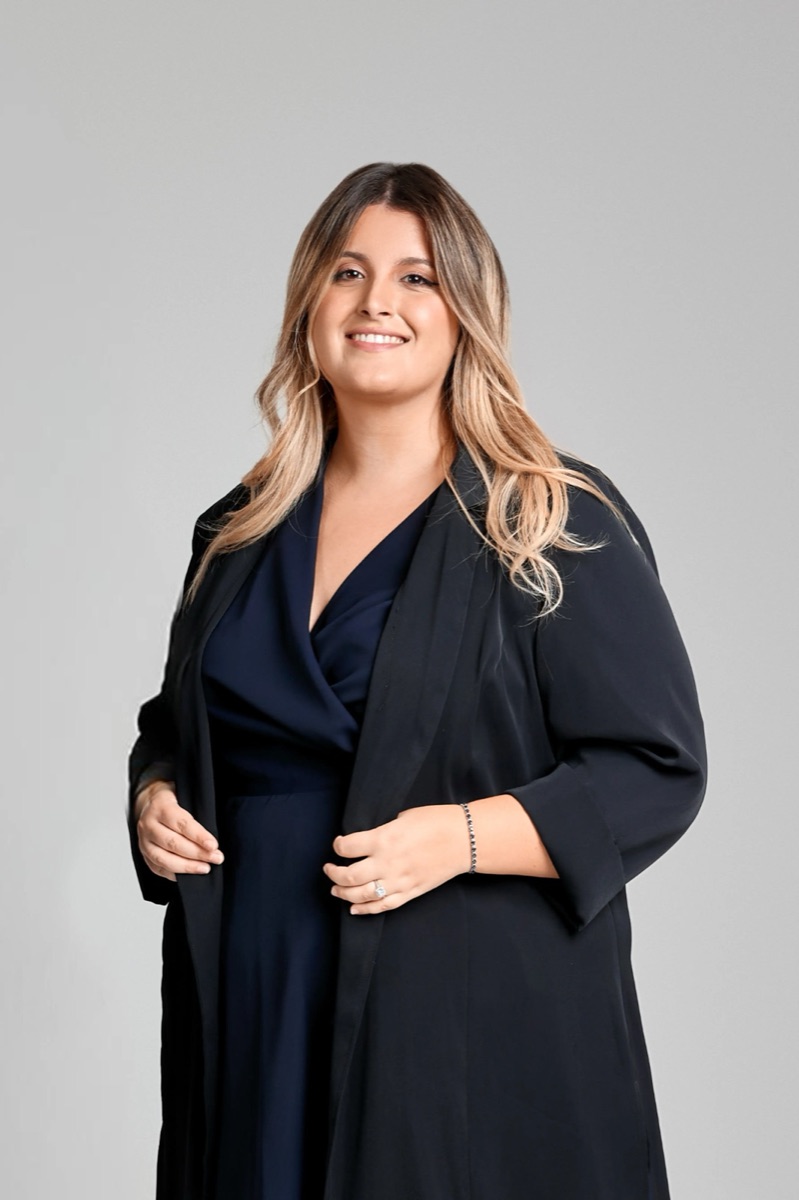
Francesca Fossatelli
Chief Investment Officer at Dexbridge Capital · Founder and CEO of FreeFinance and FreeFinance PRO · co-author of the Hoepli manual on certificates · Forbes 30 Under 30 Finance, 2021.
What I do today
I work in financial markets: I am Chief Investment Officer at Dexbridge Capital and CEO of FreeFinance.
Dexbridge Capital
Dexbridge Capital Ltd is a financial advisory and wealth management firm based in the Abu Dhabi Global Market, authorised by the Financial Services Regulatory Authority since January 2025. I am its co-founder and Chief Investment Officer: I manage wealth and set investment strategy on behalf of our clients, building and monitoring the portfolios under an advisory mandate.
I work with both institutional and professional investors, including corporates and listed companies.
CIO stands for Chief Investment Officer: the person who, inside an asset management or advisory firm, decides how the money is invested. Not the one placing orders, not the one selling: the one who sets the strategy.
- Asset allocation — how much of the portfolio goes into equities, bonds, certificates, cash.
- Instrument selection — which specific securities, on what criteria, and when to exit.
- Risk — setting how much can be lost in an adverse scenario, and testing it before it happens.
- Accountability — in a regulated firm, investment decisions carry a name, and it is mine.
FreeFinance, since 2021
In 2021 I founded FreeFinance with one goal: closing the information gap between professional and retail investors, through high-level content and education. Today our community counts over 40,000 investors.
FreeFinance PRO, since 2023
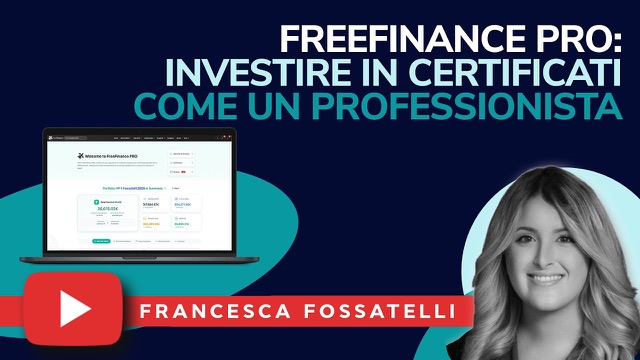
Then came FreeFinance PRO, the professional portfolio analysis platform: you type in the ISINs and the portfolio rebuilds itself — structure, underlyings, barriers, coupons, maturities — with yield in every scenario, stress tests, alerts and insights. Understanding a financial instrument is not enough: you have to be able to manage it.
Board seats
Besides chairing boards of listed companies as an adviser, I sit on the board of Gepafin. Gepafin S.p.A. is the financial company owned by the Umbria Region: it issues credit guarantees to small and medium enterprises and runs regional funding schemes and financial instruments.
Investment certificates expert, from every angle
My whole career has been about investment certificates: exchange-listed instruments that pay coupons and protect capital within defined limits. I have built them working in several investment banks, I have had my clients buy them as an adviser, I buy them with my own savings and I teach investors how to use them.
Having seen certificates from every possible angle, I know how they are built, how much the issuer makes on them, how they price over their life, when they are an opportunity and when they are instruments to stay away from.
The people who build them
Structuring and pricing at BNP Paribas and Vontobel: why a coupon is high, what sits behind a barrier, how much the choice of underlyings really weighs.
The people who recommend them
Selection for clients: which structure serves which objective, how much risk is actually being taken, and at what price it is being paid for.
The people who buy and teach them
My own personal portfolio, published trade by trade since November 2021, showing both the mistakes and the wins.
A contract, not a fund
You buy a security issued by a bank. The contract says: if the underlying — an index, a stock — stays above a given barrier, you collect a periodic coupon and get your capital back at maturity. If it falls below, you take the underlying's loss. Everything is written in advance, nothing is discretionary.
Returns without the market going up
A stock makes money if it rises. A certificate can make money even if the underlying stays flat or slips a little. In exchange you give up the upside. An actively managed certificate portfolio can deliver a return comparable to an equity portfolio but with less volatility and a larger coupon stream: I have shown it with my own personal portfolio, public since 2021.
Picking them, then managing them
Buying the right certificate is half the job. The other half is what comes after: when a barrier gets close, when it pays to sell before maturity, when to swap a position for a better one. That is why I built FreeFinance PRO, the platform that lets you assess certificates and manage them after you buy.
What came before
More than ten years inside regulated institutions across four jurisdictions — Italy, Germany, the United Kingdom, the United Arab Emirates — always around the same object: financial markets.
Specialisation in the structuring and pricing of derivatives. I learned the mathematics of certificates before I ever sold one.
Issuing investment certificates on the Global Markets desk; supporting sales and public distribution on structured products for institutional and retail clients.
At 26, in charge of the selection, marketing and distribution of Certificates and Covered Warrants on the Italian market. Over that period turnover on listed products grew from €1bn to more than €2bn traded, and market share went from 5% to 15%. In 2019 I brought the first actively managed certificate listed on Borsa Italiana's SeDeX to market and developed the Swiss bank's yield enhancement range. Representing the bank, I was a member of ACEPI, the Italian Association for Certificates and Investment Products, sitting on the working groups of the body that brings together the main certificate issuers active in Italy.
Structuring bespoke investment solutions for institutional clients, coordinating trading, legal, compliance and back office.
Daily analysis, webinars and courses, an archive of more than 1,500 articles and a YouTube channel with over 200 videos, including the full course on investment certificates. Five Telegram channels, two of which follow the portfolios: since November 2021 I have published my certificate portfolios trade by trade, with date, price and reasoning. The community counts more than 40,000 investors today.
In 2023 I launched FreeFinance PRO, the professional portfolio analysis platform: from the ISINs it rebuilds structure, underlyings, barriers and coupons, with yield in every scenario, stress tests, alerts and a resilience score.
Setting investment strategy for institutional and professional investors, including corporates and listed companies.
The portfolio, trade by trade
Since 1 November 2021 I have published two certificate portfolios with every single trade: date, price, reasoning — including the positions that go wrong. These are not signals, and it is not a model portfolio: it is my own personal portfolio, the buys and sells I make with my own savings.
Obiettivo Resilienza
The portfolio built around the concept I defined, the one that names the whole method. Certificates on core indices, deep barriers, frequent coupons: instruments picked so that the price holds up when markets fall, not merely because they yield.
Follow the Telegram channelCavalcare la Volatilità
The portfolio that treats volatility as raw material: when premiums rise because the market is afraid, the structures get interesting. Livelier underlyings, shorter horizons, far more active management.
Follow the Telegram channelI don't beat the S&P 500 by gaining more: I beat it by losing less
In years of strong equity rallies the certificate portfolio does worse than the index. When the correction arrives, barriers and protections kick in and the coupons keep paying: 2022 (the worst year) is where the room opened up to outperform the world's most efficient index.
Period 1 November 2021 – 14 November 2025, four years of publication. Updated performance and the calculation methodology are published in the channels and in FreeFinance PRO. Past returns are not indicative of future results.
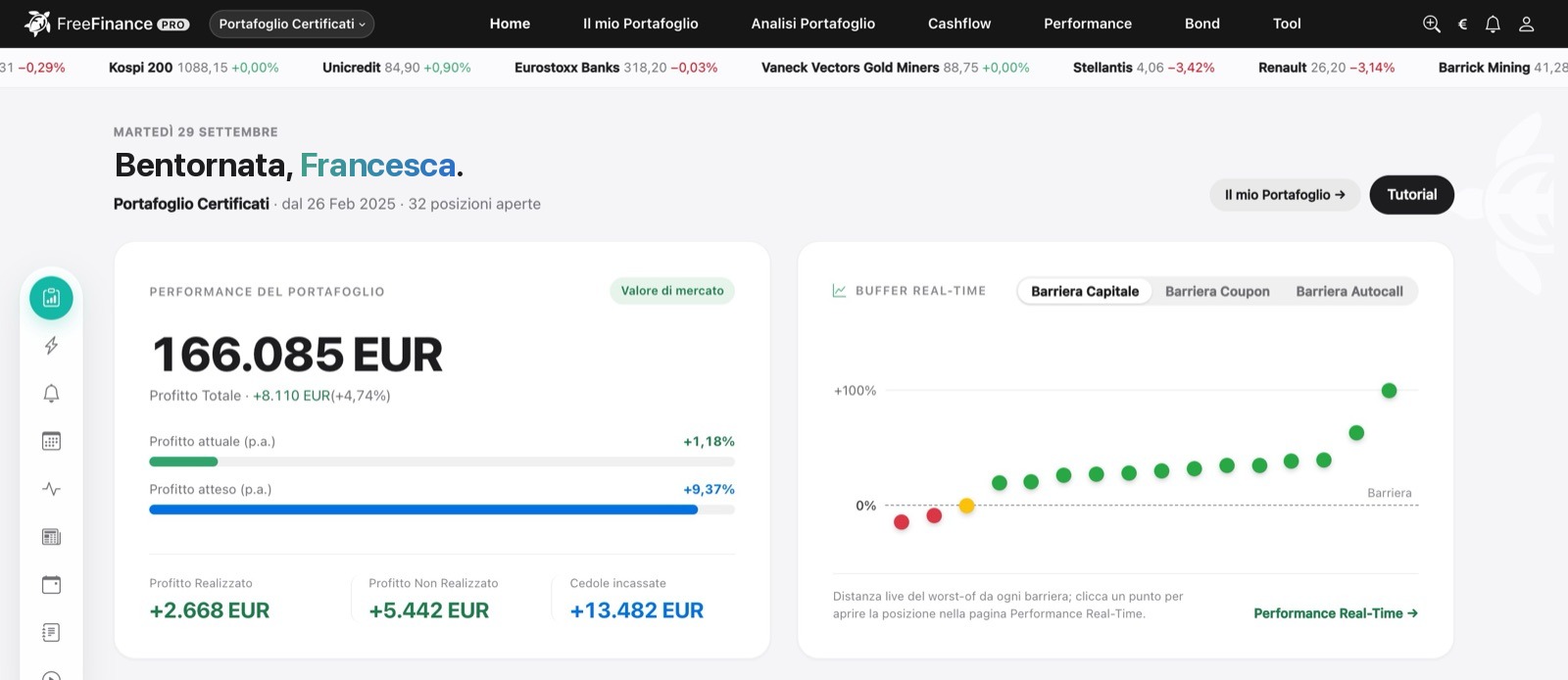
How I monitor my certificate portfolio: FreeFinance PRO
A certificate portfolio cannot be left in a drawer: resilience decays, barriers get closer, valuation dates arrive. That is why I built FreeFinance PRO — and these are the screens I open every day.
The concepts and strategies I defined
Most of these ideas had no name before I gave them one. I built them explaining real trades in webinars and channels, and they are now the vocabulary an Italian investor community uses to think about certificates.
Resilience — the concept everything else rests on
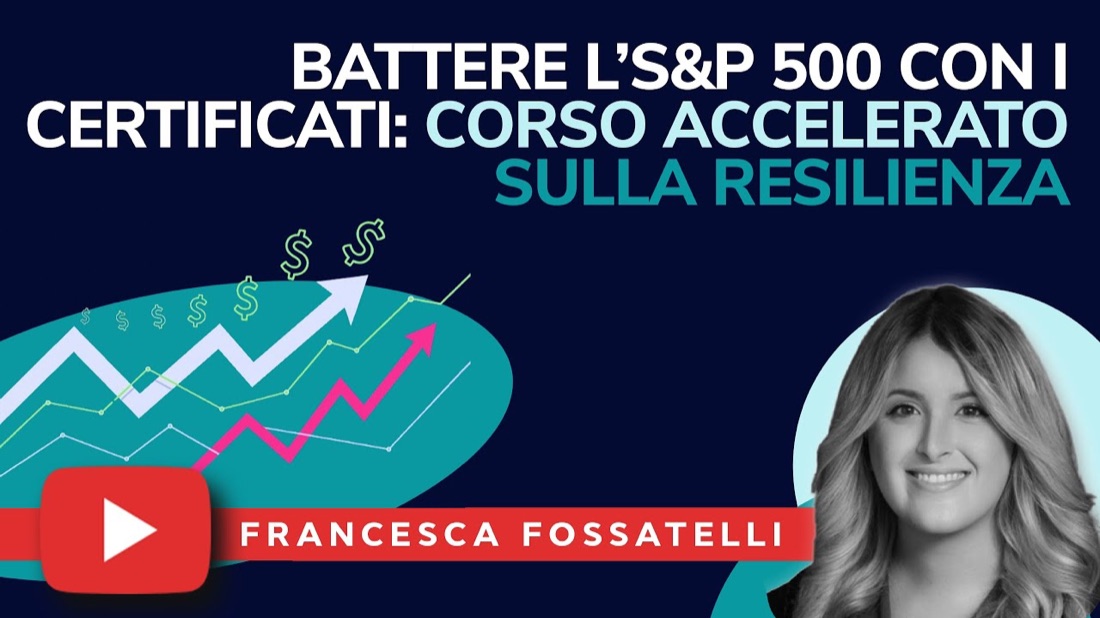
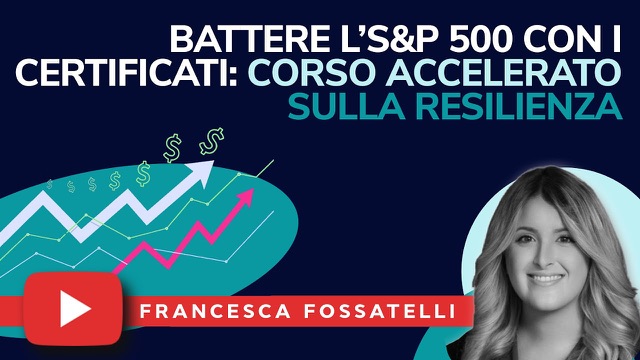 Where to start Crash course on resilience Beating the S&P 500 with certificates: what makes a certificate resilient, how to measure it, what it costs and when resilience starts to wear off. Every concept in this group, explained on real cases. 14 November 2025 · YouTube
 Resilience
Published in October 2021A resilient certificate is one that suffers only a small price loss when the underlying falls sharply. It is not a marketing label: it is measurable, and it depends on the barrier, the buffer, coupon frequency, distance from the autocall, the airbag and the choice of underlyings. FreeFinance PRO has a dedicated section that scores it across the portfolio.
Resilience has a price
Published in November 2025All else equal, the more resilient a product is, the less it yields. Anyone chasing the highest coupon on the market is buying, without realising it, the least resilient product. Every portfolio choice implies a decision about the resilience the chosen certificate will show over its life.
Resilience decay
Published in November 2025Resilience is not permanent: it wears off. As the underlying moves, time passes and conditions change, a certificate that was resilient may stop being so. That is why a certificate portfolio has to be managed, not left in a drawer.
High-resilience zone
Published in November 2025The moment when a certificate has built up enough buffer and enough premiums that exiting beats staying in. The point at which an active strategy beats “hold to maturity and don't look”.
A hard core of resilient certificates
In my content since November 2021The core of the portfolio: low-risk, resilient certificates. In 2026, for example, the hard core is on core indices — not single stocks, not volatile indices — with a wide barrier buffer, typically at least 35%, high frequent premiums (above 10%) and a step-down autocall.
The pearls
Published in June 2023A certificate with an optimal risk-return trade-off, clearly better than a comparable one. Pearls are resilient in practically every scenario, not only the likeliest ones: they are the only positions I allow myself to overweight heavily in the portfolio.
Managing a position — entering, improving, exiting
Switch to improve
Published in March 2023You sell a certificate and buy one with a better risk-return trade-off: you cut the risk while keeping the return intact, or raise the return while keeping the risk intact.
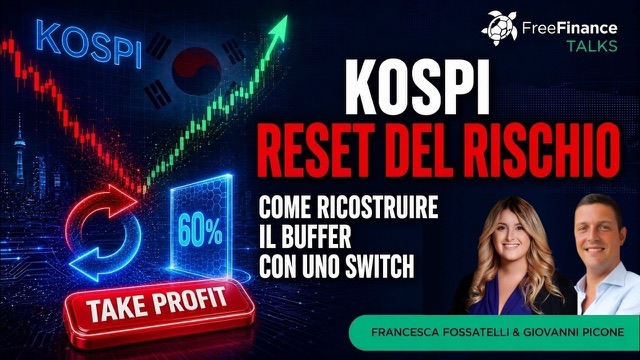 KOSPI: rebuilding the buffer with a switch to improve
 Switch to recovery
Managing a certificate at a loss: you replace the position with a structure that can recover more easily. The textbook case is Ubisoft, February 2026. It is not a concept I invented: it is a known technique, and I show how it works on real cases.
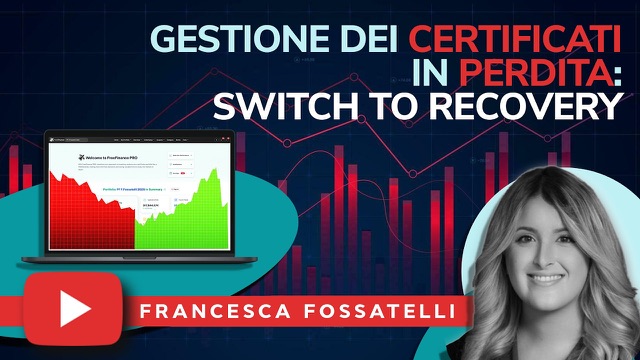 Switch to Recovery: the Ubisoft case
 Side-by-side
Published in February 2023The alternative to a switch when you do not want to sell the losing position: you place fresh capital alongside it in a new structure, lowering the average price of the overall exposure instead of crystallising the loss. Real case: Carnival.
 The side-by-side technique on losing certificates
 Residual yield
In my content since March 2021What the certificate I already hold yields from today, computed on the current bid price rather than the purchase price. It is the number that decides hold or sell: below a certain threshold, waiting for maturity costs more than it pays.
 How to calculate residual yield
 Premium and discount to the linear value
In my content since March 2022The “linear” value is what the certificate would be worth if it simply tracked the underlying with no structure. Comparing it with the market price tells you whether the certificate trades at a premium or a discount — whether the market is pricing it better or worse than the structure deserves. I did not invent the concept: I defined the maths behind the calculation.
 The linear value: how to calculate and use it
 Early take profit
In my content since May 2025Holding a certificate to maturity is rarely the right call. When the residual yield drops, it pays to exit and reinvest elsewhere: freed capital works, capital parked waiting for redemption does not.
 Derisking and taking profit on certificates
 The best strategies to apply to certificates and bonds
The Comet strategy
Published in April 2024Certificates with an exceptional risk-return trade-off that exists only at one precise point in time — when the comet passes. They are resilient, they can pay off in a very short window if conditions stay stable, and they offer yields unavailable elsewhere in that market moment. Like comets, they do not come back when it suits you.
 The Comet strategy and Comet certificates
 The Dynamic Duo
Published in April 2024You buy the certificate and its underlying together — it takes two heroes to make it work, hence the name. The certificate collects coupons and protects, the stock captures the rebound. Typically applied to a name that has just sold off hard.
 The Dynamic Duo strategy
 The Jenga Method
Published in May 2025Making bonds and certificates coexist in the same portfolio through tactical allocation: you slide blocks out and back in without toppling the tower. It is the bridge between the part that generates cash flow and the part that generates return.
 The Jenga Method
 Bond substitution
In my content since May 2021The same reasoning on the fixed-income side: cutting the risk of a bond portfolio, or lifting its yield, by using certificates instead of — or alongside — bonds. It includes Credit Linked Notes, where the risk you take is credit risk.
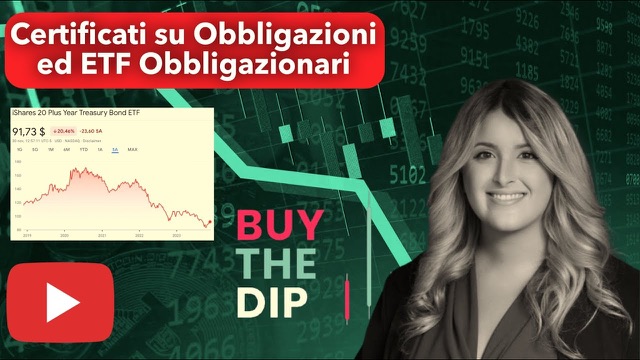 Certificates on bonds and bond ETFs
 The Sweet Spot
Published in January 2024The method I use to pick the right bond maturity: the point on the curve where the extra yield genuinely compensates for the duration risk. Before it you give up return; after it you are buying volatility that does not pay you.
 The bond Sweet Spot: how to calculate it step by step
 Duration and convexity
The two measures that tell you how much a bond's price moves when rates change. Duration gives the sensitivity, convexity the curvature: on long-dated bonds the gain when rates are cut is larger than the loss when they rise. These are the parameters I use to pick maturities and issuers in my bond portfolio.
 Bond crash course: duration and convexity
 Cumulative Callable bonds
Bank bonds that pay no periodic coupons: the return builds up in the accrued interest and is paid in full at maturity or on the date the issuer chooses to call them, usually every year from the first call date. Before buying, I compare the yield to maturity across the different call scenarios.
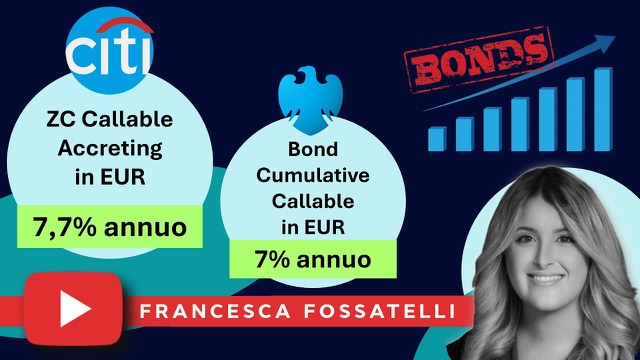 Cumulative Callable bonds and ZCB Callable Accreting
 The double life of Maxi-Coupons
In my content since October 2024Certificates with a large upfront coupon have two uses that almost nobody combines: they generate income and, in tax season, they let you offset or defer expiring capital losses. They are the basis of my method for the Italian tax loss carry-forward.
 Crash course: capital losses and Maxi-Coupons
 Defensive and aggressive Maxi-Coupon strategies
Published in October 2024The two ways of using a Maxi-Coupon to defer capital losses, named after how much risk you take. Defensive: buy on the cum-date and sell on the ex-date, in and out in less than a day. Aggressive: collect the maxi-premium and keep the certificate, aiming for the autocall.
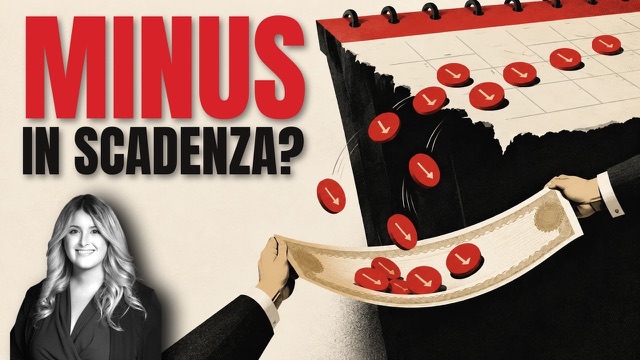 Capital losses expiring in 2026: recovering them with Maxi-Coupons
 The channels
Five channels, close to 5,000 messages published since 2021. Two follow the portfolios trade by trade; the others are analysis, news and teaching.
🔴 Vendita DE000VK2M1K0 a 78,80
🟢 Acquisto DE000VG36PH5 a 72,30 11/06/2026 · 17:07
🔴 Vendita DE000WA02LK1 (UBS) a 1014,60
🔴 Vendita CH1505580865 (Leonteq) a 978,33
🟢 Acquisto XS3379870010 (BBVA) a 994 08/07/2026 · 15:34
The videos
Two tracks: the full course on investment certificates, and the weekly market analysis.
Investment certificates course
The playlist where I explain the concepts and strategies on this site, with real cases.
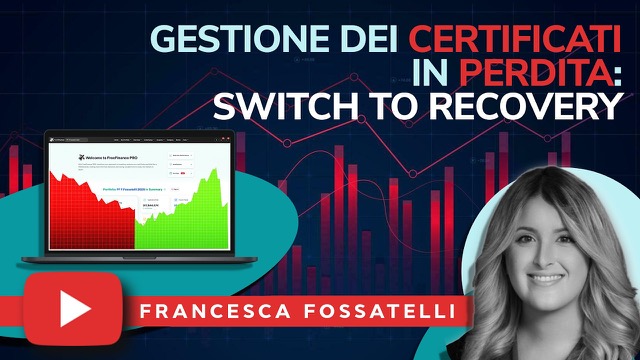 Switch to Recovery: managing certificates at a loss (Ubisoft case)5 February 2026
 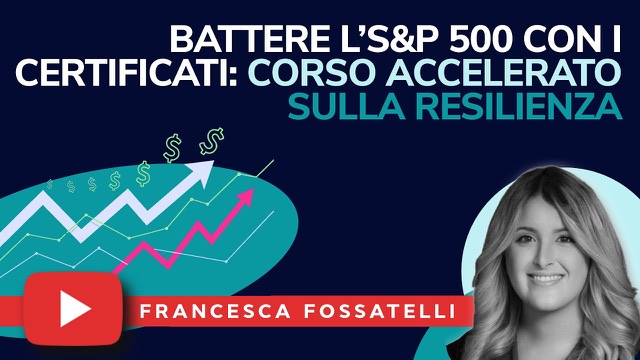 Beating the S&P 500 with certificates: crash course on resilience14 November 2025
 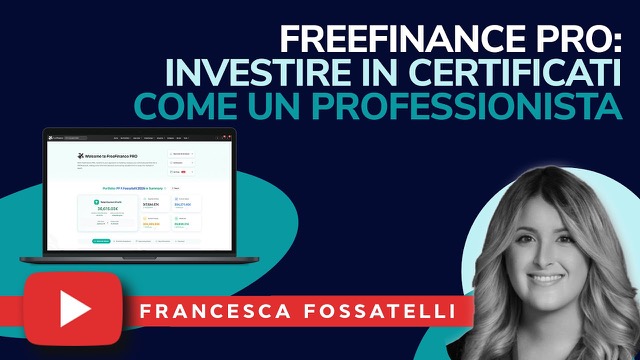 How to calculate the residual yield of a certificates portfolio1 December 2025
 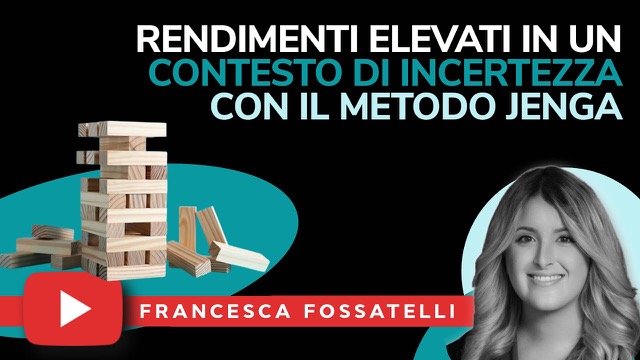 High yields in an uncertain market: the Jenga Method21 June 2025
 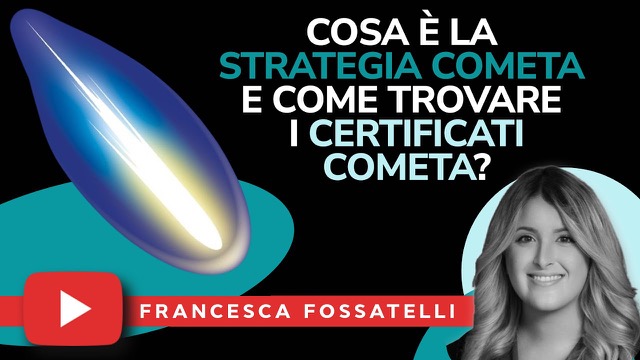 What the Comet strategy is, and how to find the right certificates7 April 2024
 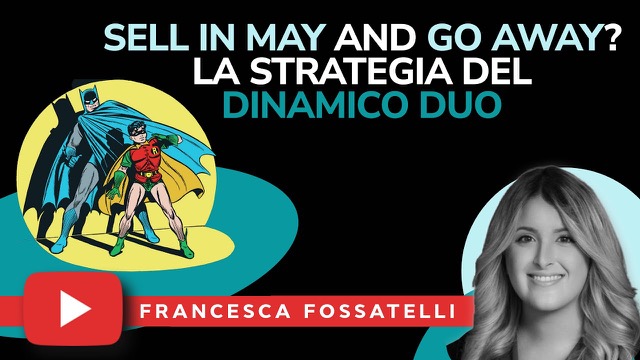 The Dynamic Duo strategy when stocks and bonds fall20 April 2024
 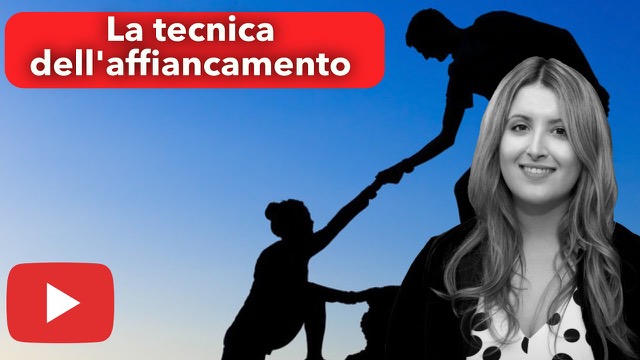 The side-by-side technique for certificates at a loss23 February 2023
 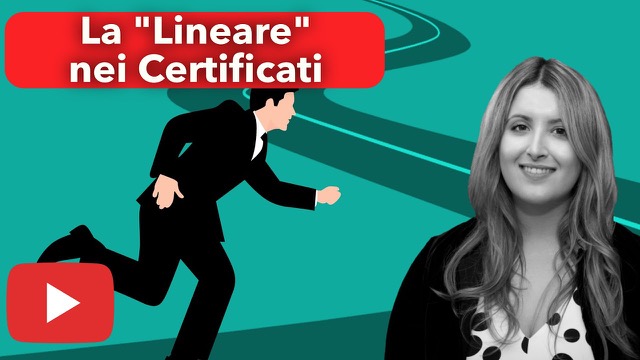 The linear value of a certificate: how to compute and use it3 August 2022
 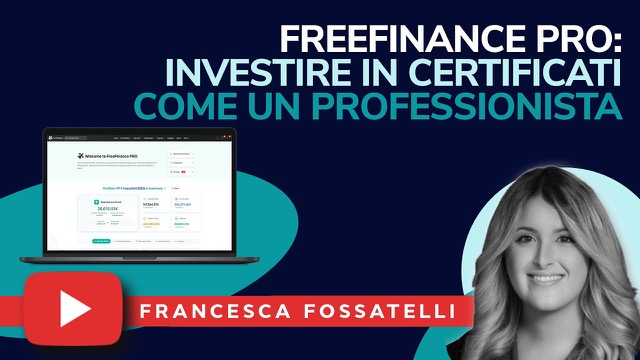 FreeFinance PRO tutorial: the portfolio analysis platform3 December 2025
 Investing with Francesca Fossatelli
Market analysis, central banks and portfolio management, episode after episode.
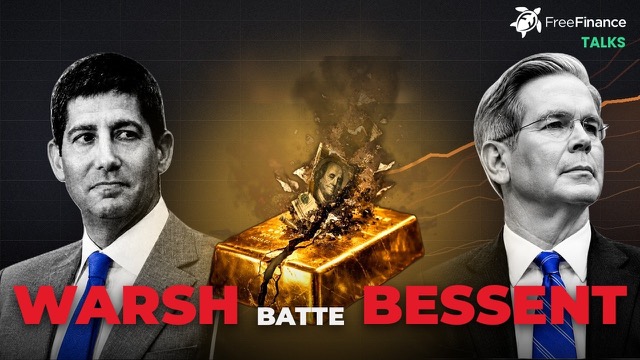 Half an hour against 4 billion: how Warsh beat Bessent at Jackson Hole1 September 2026
 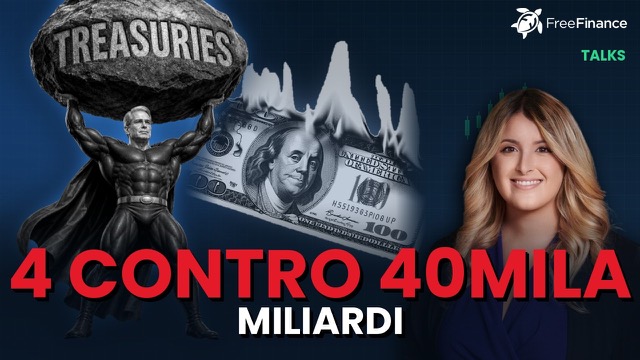 4 against 40 trillion: why the US Treasury can't bring rates down (Part 2)26 August 2026
 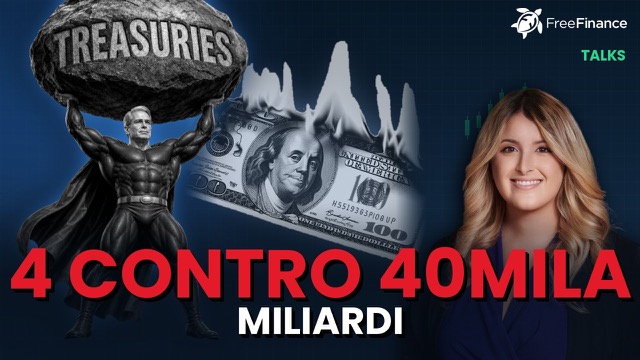 4 against 40 trillion: Bessent's move on US Treasuries25 August 2026
 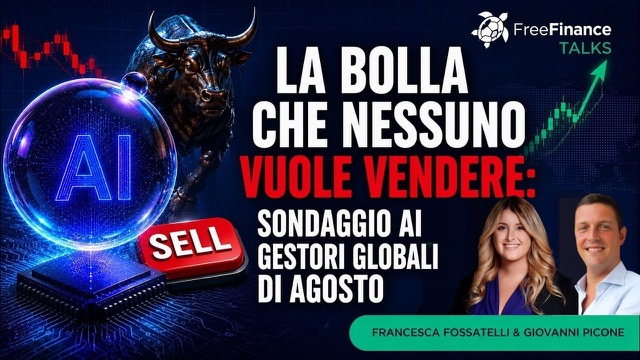 The bubble nobody wants to sell: August global fund manager survey19 August 2026
 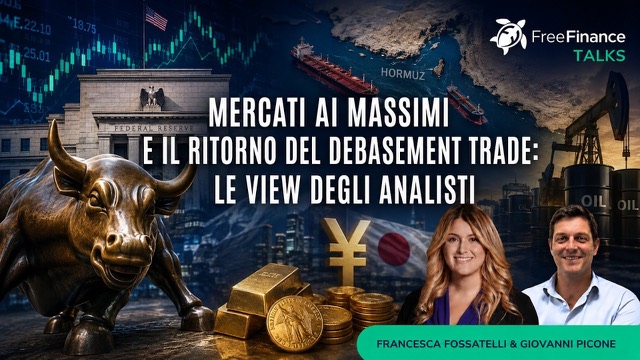 Markets back at all-time highs: what is really behind the rebound? Part 217 August 2026
 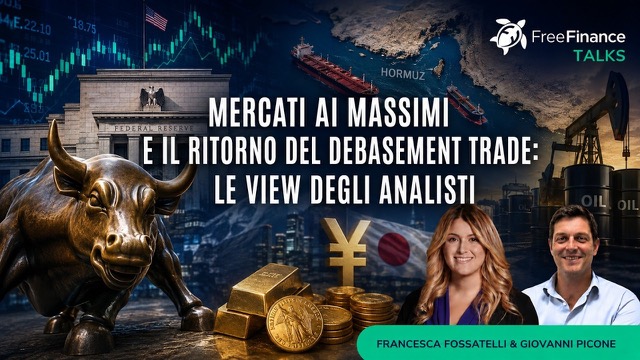 Markets back at all-time highs: what is really behind the rebound? Part 115 August 2026
 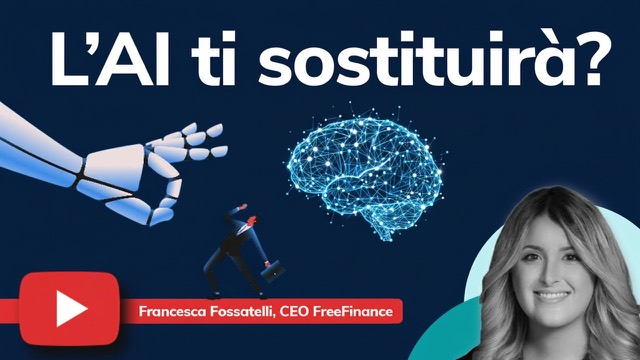 Will AI replace you? Falk-Tsoukalas say yes, but Microsoft is proving otherwise23 May 2026
 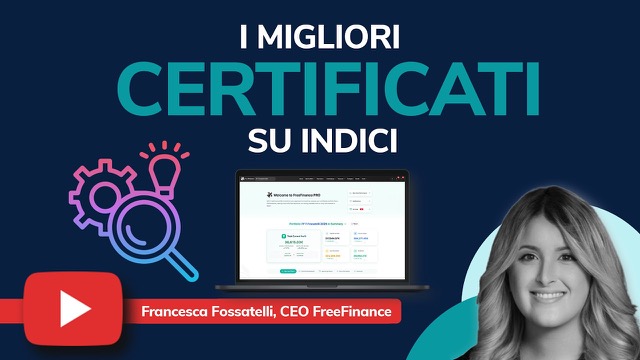 Analysing the best index certificates with FreeFinance PRO16 May 2026
 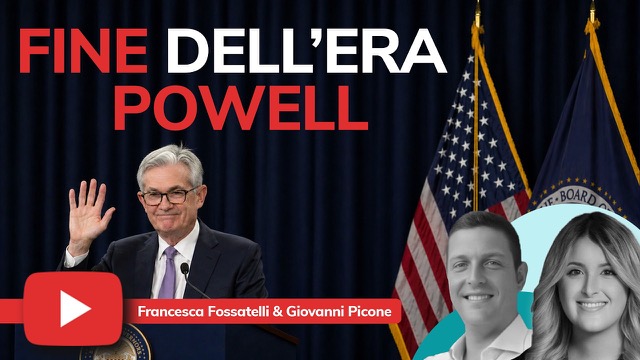 The end of the Powell era, with bonds in turmoil and equities rallying30 April 2026
 The books
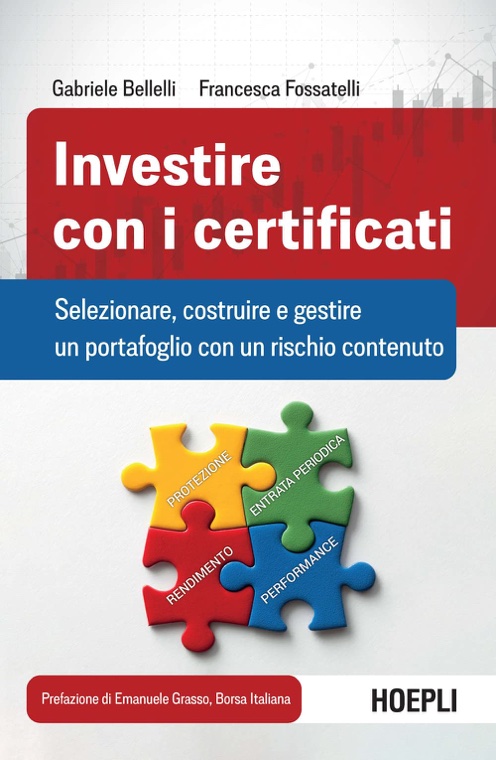
Investire con i certificati — selecting, building and managing a low-risk certificate portfolio
One of the best-selling Italian books on investment certificates. A text that takes the reader "all the way to the advanced topics only industry professionals know", holding together the perspective of the private investor and that of the issuer, the structurer and the institutional investor.
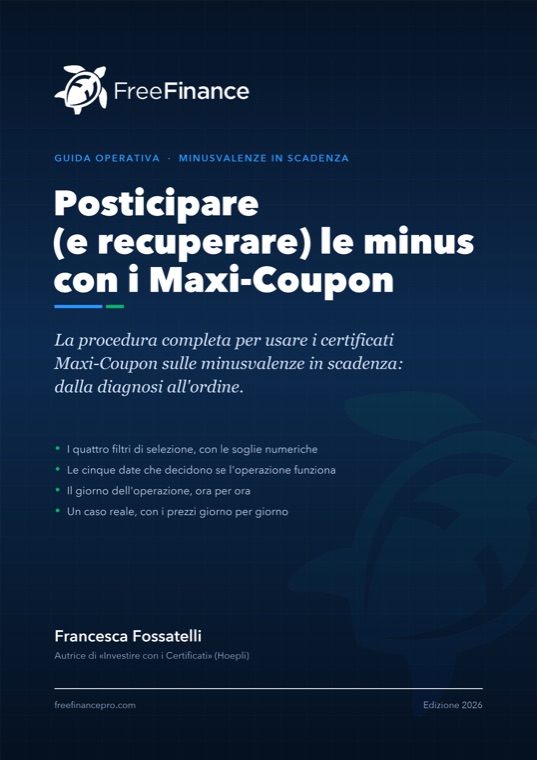
Posticipare (e recuperare) le minus con i Maxi-Coupon — deferring and recovering capital losses with Maxi-Coupons
The hands-on guide to using Maxi-Coupon certificates on expiring capital losses, from diagnosis to order: the four selection filters with their numeric thresholds, the five dates that decide whether the trade works, the day of the trade hour by hour, and a real case with prices day by day.
Every step can be done by hand or with the FreeFinance PRO Maxi-Coupon Tool.
The book is available free of charge to all FreeFinance PRO subscribers on the Premium plan or higher.
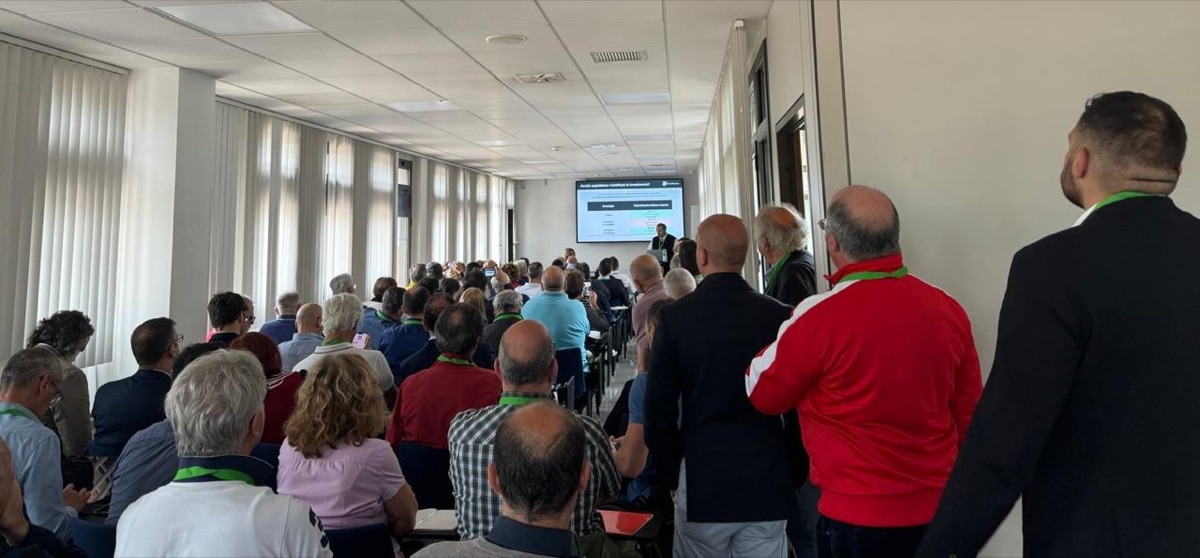
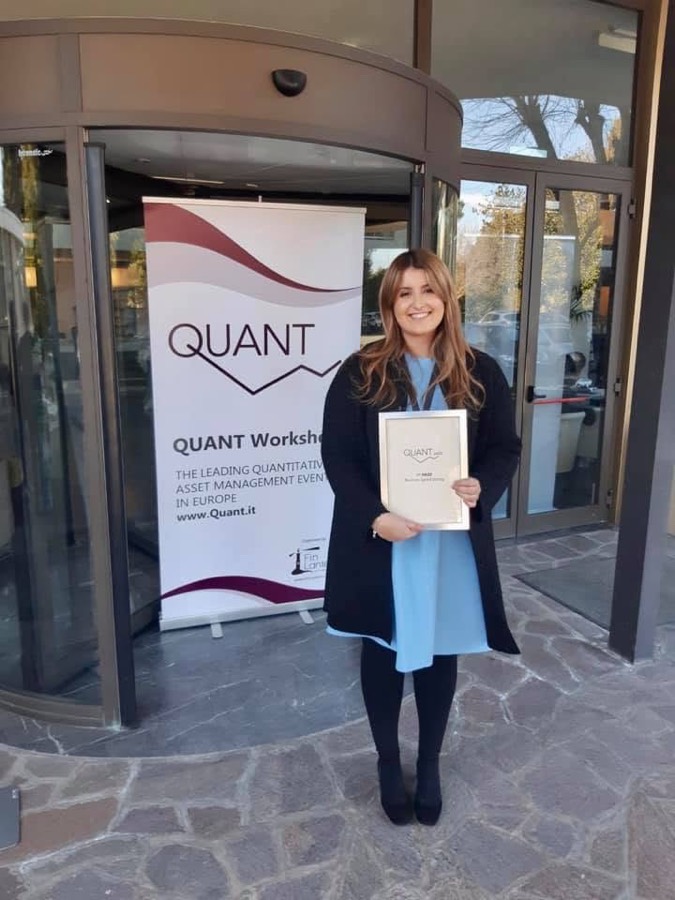
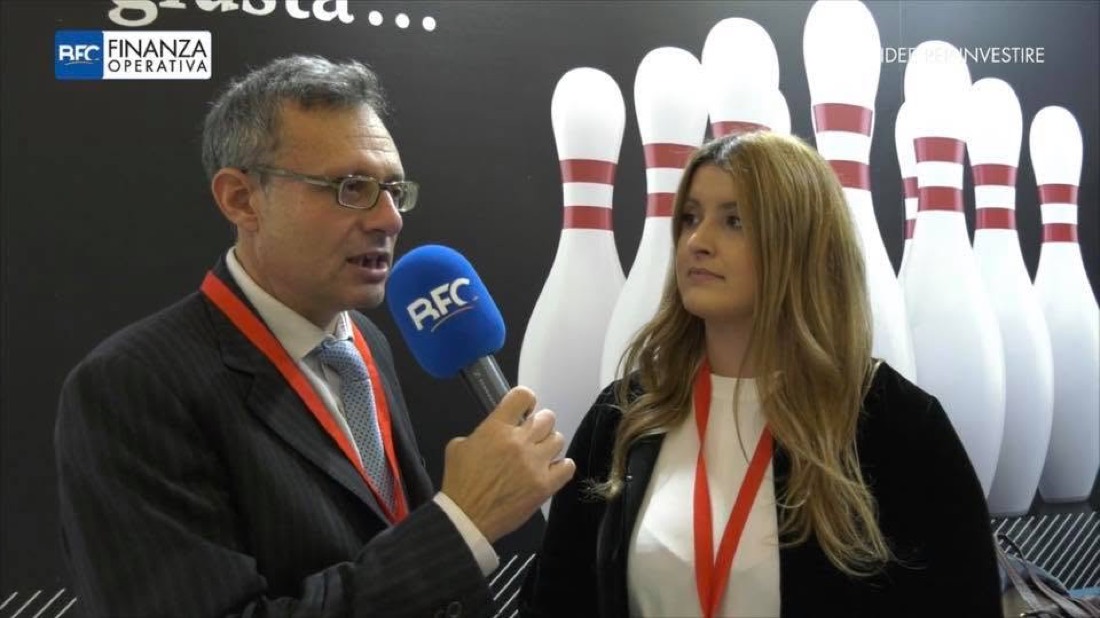
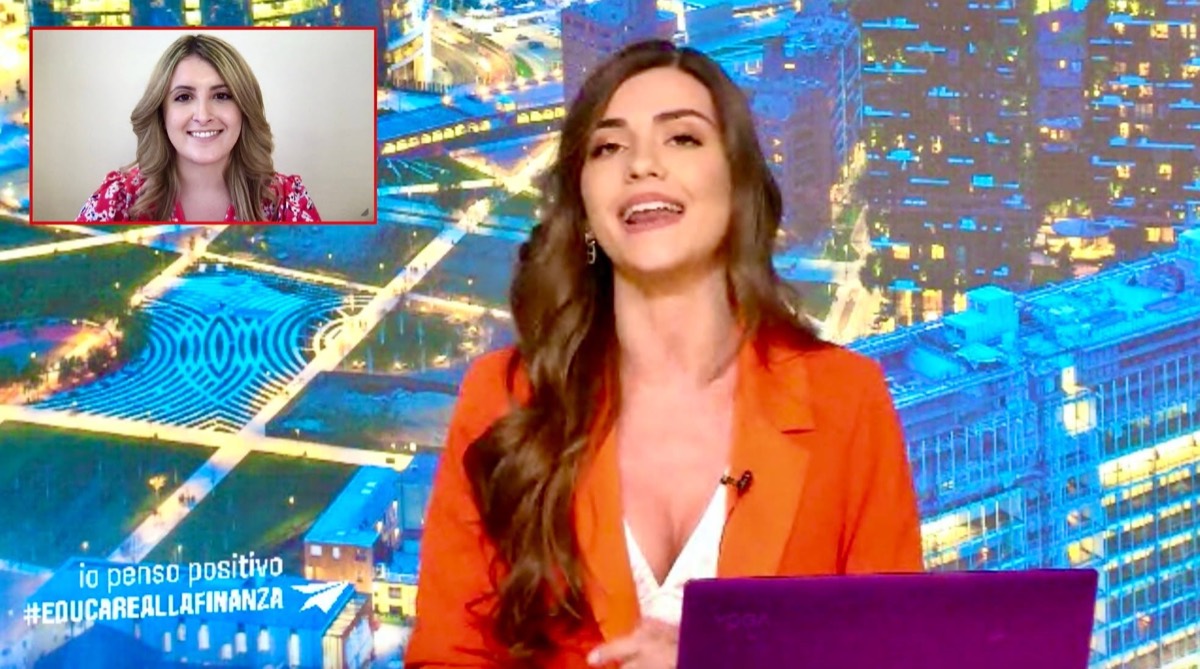
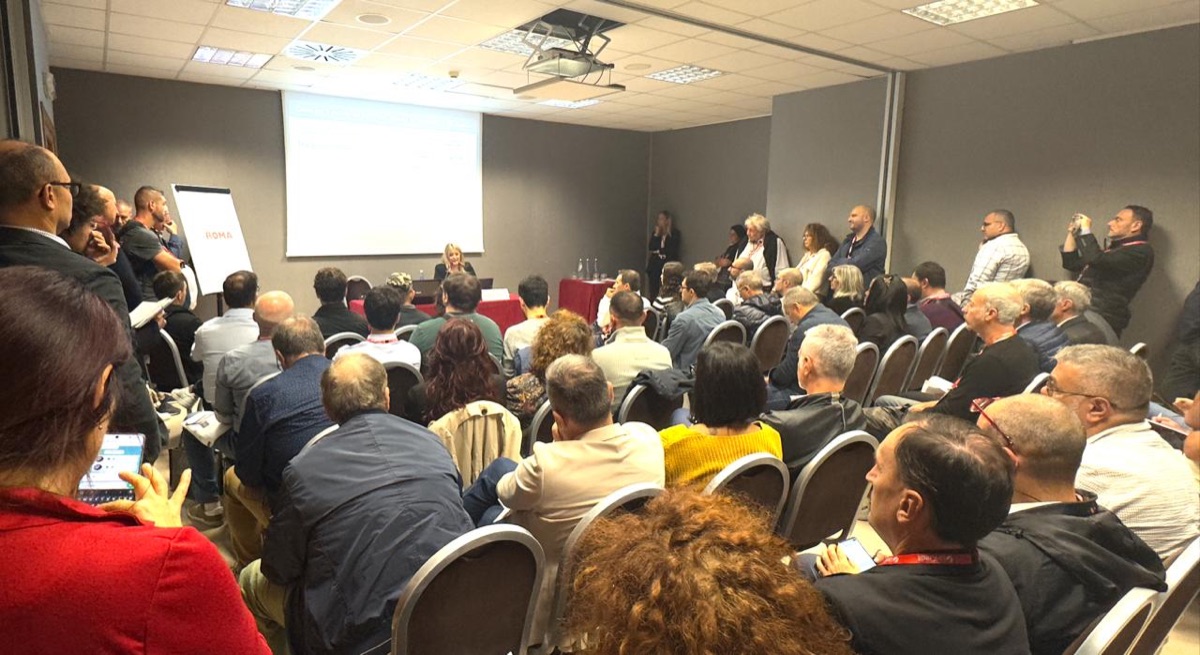
Conferences, events and teaching
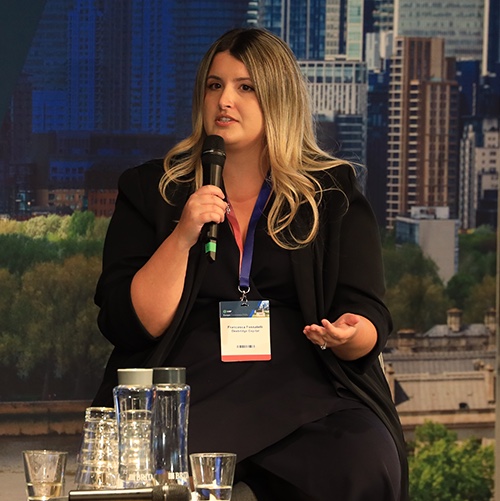
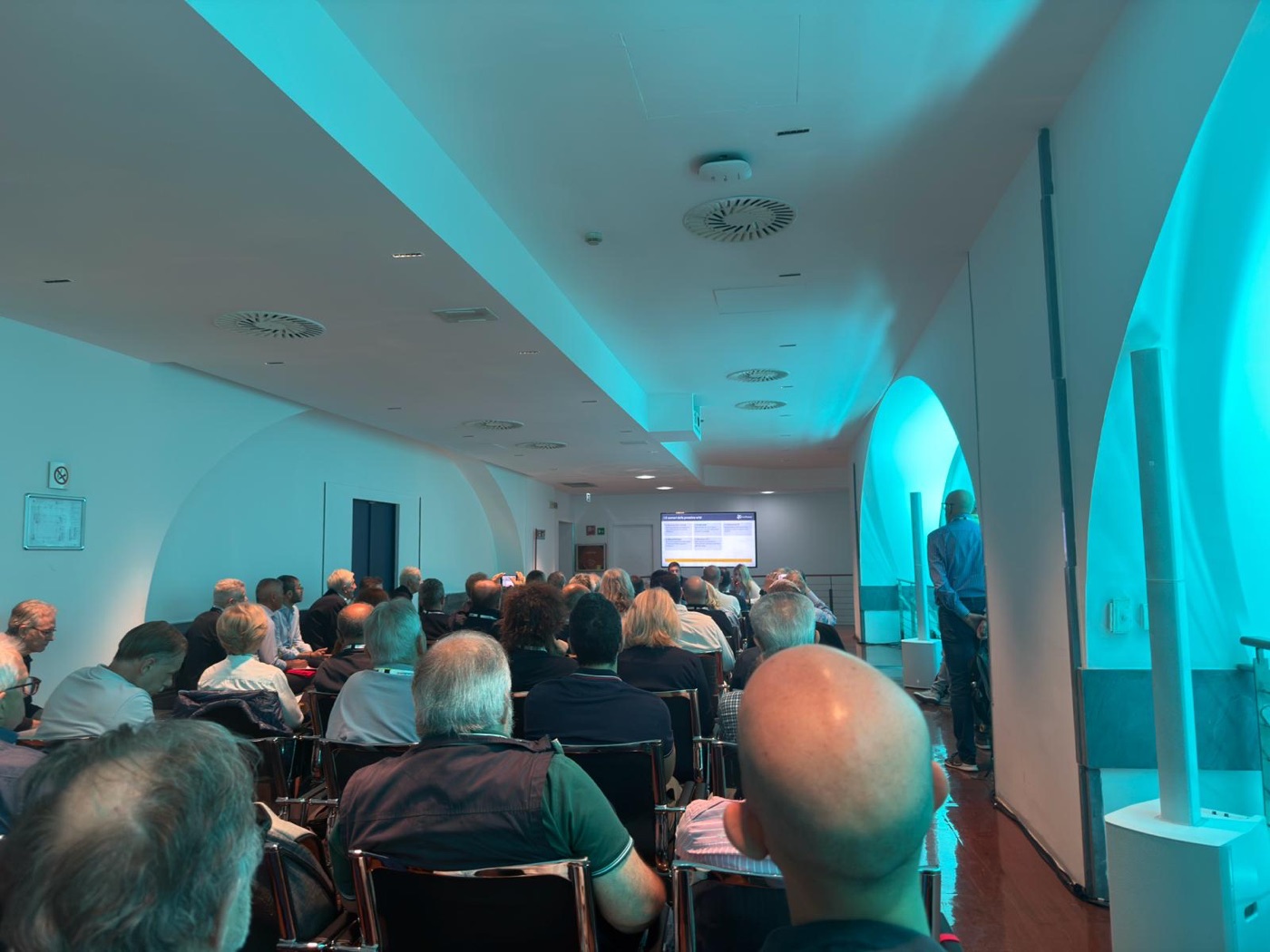
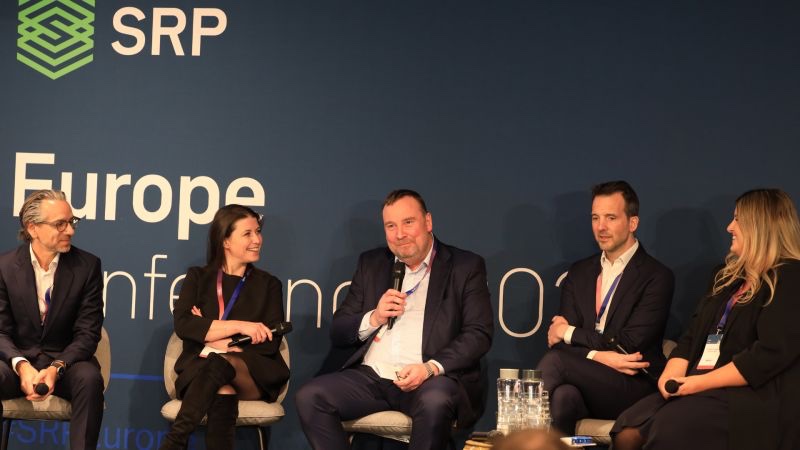
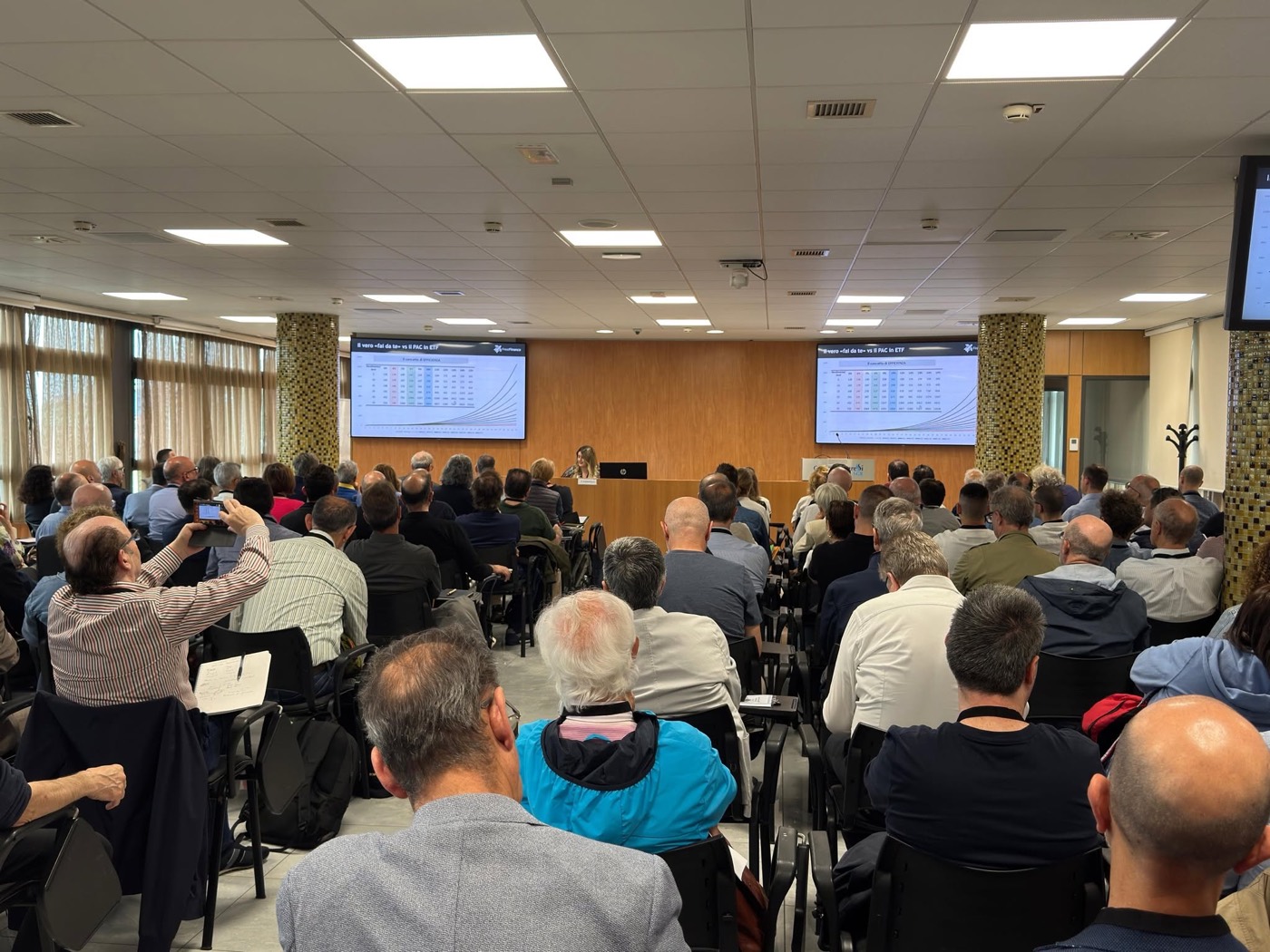
I have been speaking about certificates since I was on the other side of the table: first as an issuer, for Vontobel, then with FreeFinance.
What others say
People in the industry
“Ambition and talent — nothing can stop you now, Francesca. Sincere congratulations.”Pierpaolo Scandurra — Certificati e Derivati, on her Forbes 30 Under 30 selection
“Thank you for your skill and your generosity.”Giovanni Cuniberti — university lecturer and financial educator, after her talk on certificates at the University of Turin
“Publishing a book is a great accomplishment; it becomes your hallmark, your reference. Well done.”Andreas Blümke — leading author on structured products, LinkedIn
What investors say and recommend
These are not solicited testimonials: they are public comments, left under my YouTube videos and in investor discussions.
“A few days ago I bought the book Investire con i certificati and read it avidly. An essential book to enter the world of certificates on the right foot. Clear, understandable and thorough. I recommend everyone follow Francesca Fossatelli's seminars on YouTube: enlightening!”@francescodefalco7raggi, under the video “The certificates portfolio with Alessandro Pavan and Francesca Fossatelli”, YouTube
“I'd recommend following […] Francesca Fossatelli, who shares all her trades and the reasoning behind every choice. Thanks to her I found certificates on slightly more exotic underlyings with great yields and relatively stable prices.”User on r/ItaliaPersonalFinance, Reddit
“Speaking as an adviser in the industry, I really value your webinars. Very useful in my meetings with my clients.”Andrea N., consulente finanziario, under the video “Investing in 2025: preparing for a hard landing with bonds”, YouTube
“I follow your public portfolios on Telegram. Nobody online is more transparent than you. […] You do sound financial education: for free.”@guidorogno7818, under the video “Higher for longer or Normal for longer?”, YouTube
“I follow a great many finance channels. I find yours among the best, above all from a technical point of view. On certificates it is number one.”@pasqualeturano4060, under the video “China reopening: investing in travel and pharma”, YouTube
“Congratulations on the professionalism, the completeness of the information and the “intellectual honesty”. […] For the clear presentation of the two portfolios (nothing hidden), I'd say you are one of a kind.”@antonioitaliani6992, under the video “Bull market or bear market rally: what fund managers think”, YouTube
“Clear, highly competent and transparent, with constant updates on the portfolio… A rare pearl in a sea of fake gurus.”@AAlfredo1984, under the video “Why bond yields could keep rising”, YouTube
“Always very precise and professional. I've noticed you have two qualities few people have: in-depth knowledge of the subject and attention to detail.”@rob412, under the video “A 5% deposit account or short-dated bonds?”, YouTube
“The only channel that combines this depth of analysis with such clarity.”@oui7061, under the video “4 vs. $40 trillion: why the US Treasury can't bring rates down”, YouTube
How third-party sources describe me
| Source | How it presents me |
|---|---|
| Il Sole 24 Ore · Plus24 | “Francesca Fossatelli, certificates expert and founder of FreeFinance”, quoted on certificate risk in the Beyond Meat case. |
| Forbes Italia | Selected among the 100 Under 30, Finance category, March 2021: “at 26 she was appointed head of flow products development Italy at Vontobel. Under her lead the issuer doubled turnover on listed products, from one to over two billion euros traded, and tripled market share, from 5% to 15%.” |
| ITForum / BlueRating | “Francesca Fossatelli, certificates expert”, referring to the strategies of the public Obiettivo Resilienza portfolio. |
| Investing Milano | “Expert in derivatives pricing and structuring”, who “successfully led the Italian Certificates and Covered Warrants market as Head of Italy”. |
| Investing Roma | “She achieved a total return of over +50% investing in investment certificates” with “winning strategies that let her beat the S&P 500”. |
| Investire-Certificati.it | “A Bocconi graduate and expert in structured financial instruments and finance.” |
| Università di Bologna | Introduced as specialising in derivatives structuring and pricing, with her results at Vontobel and her Forbes 30 Under 30 2021 — Finance selection. |
| Investing.com | Profile rated “Professional”: structurer for institutional clients, founder of FreeFinance, Forbes Under 30. |
| Hoepli | “Specialist in derivatives pricing”, formerly head of Vontobel's Italian listed certificates. |
| YouFinance | CEO of FreeFinance and CIO of Dexbridge Capital; FreeFinance content described as “high-level educational content”. |
In the press
From the financial dailies to the general weeklies: where I have appeared, and in what words.
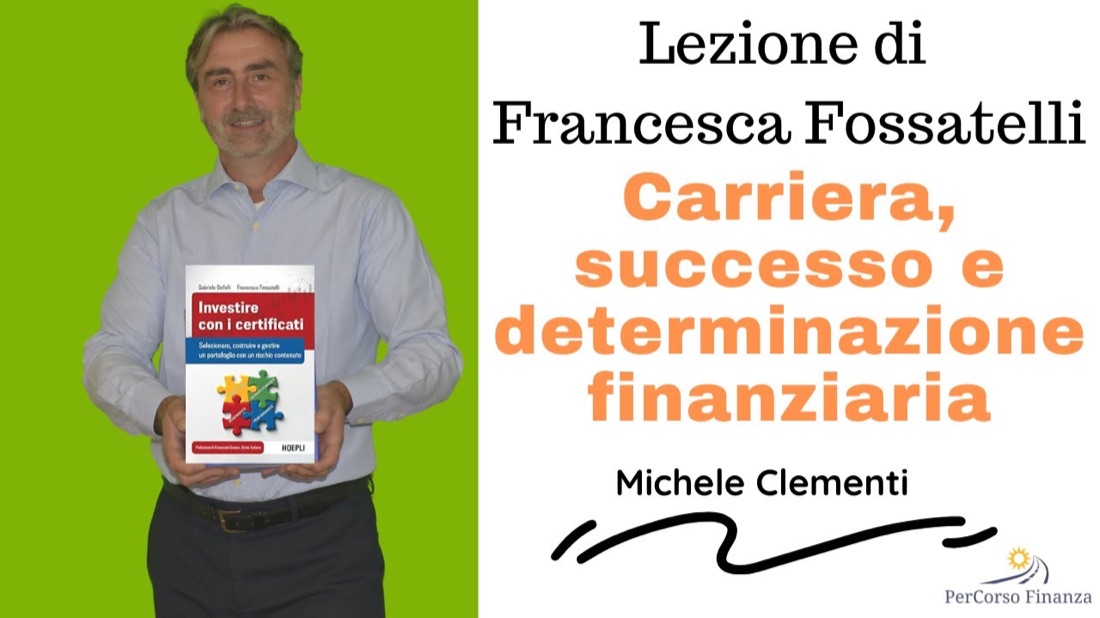
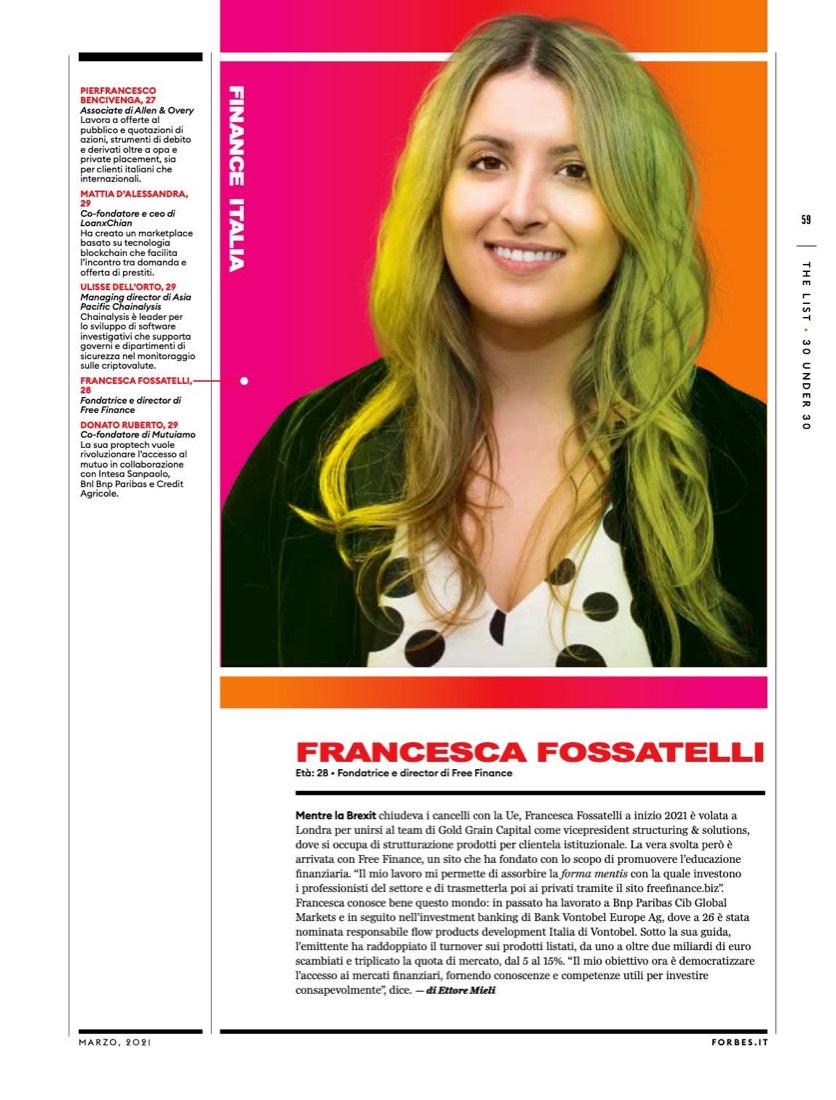
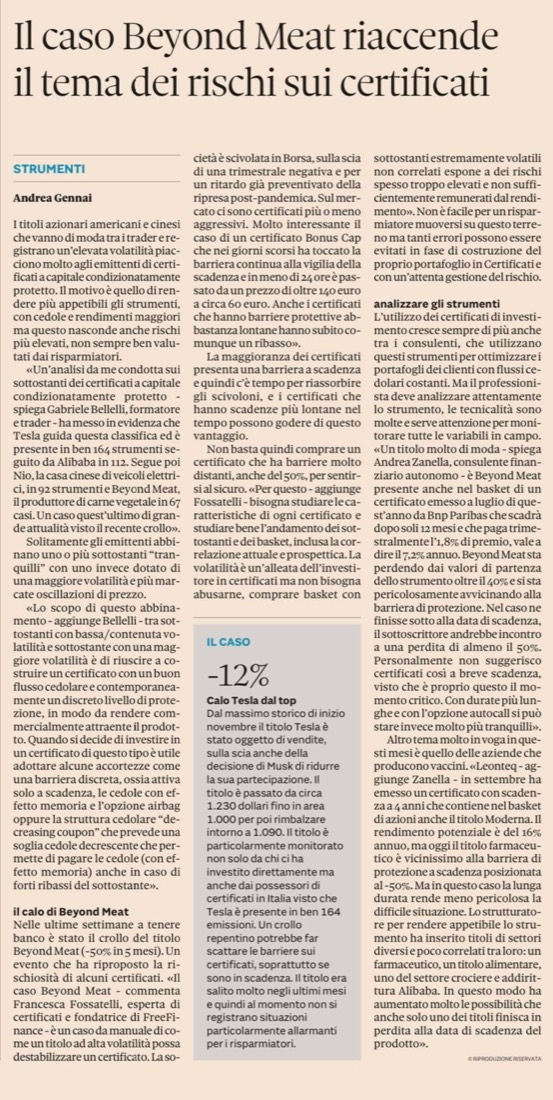
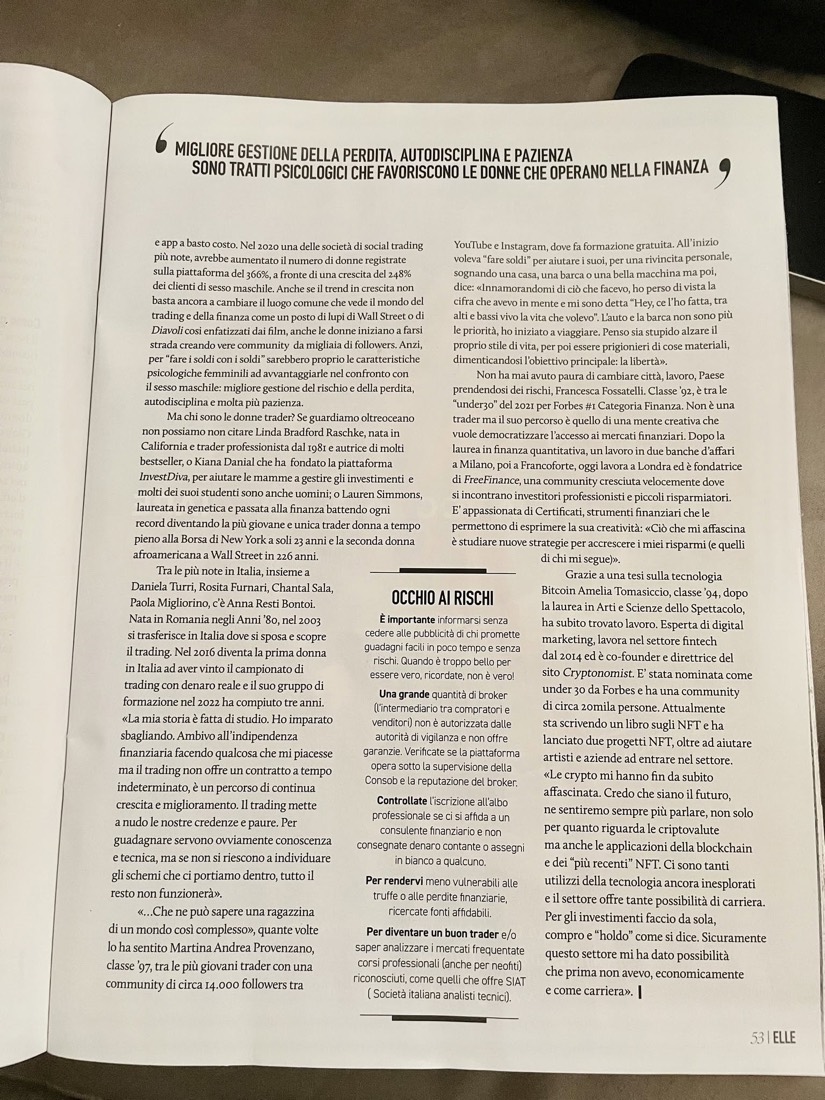
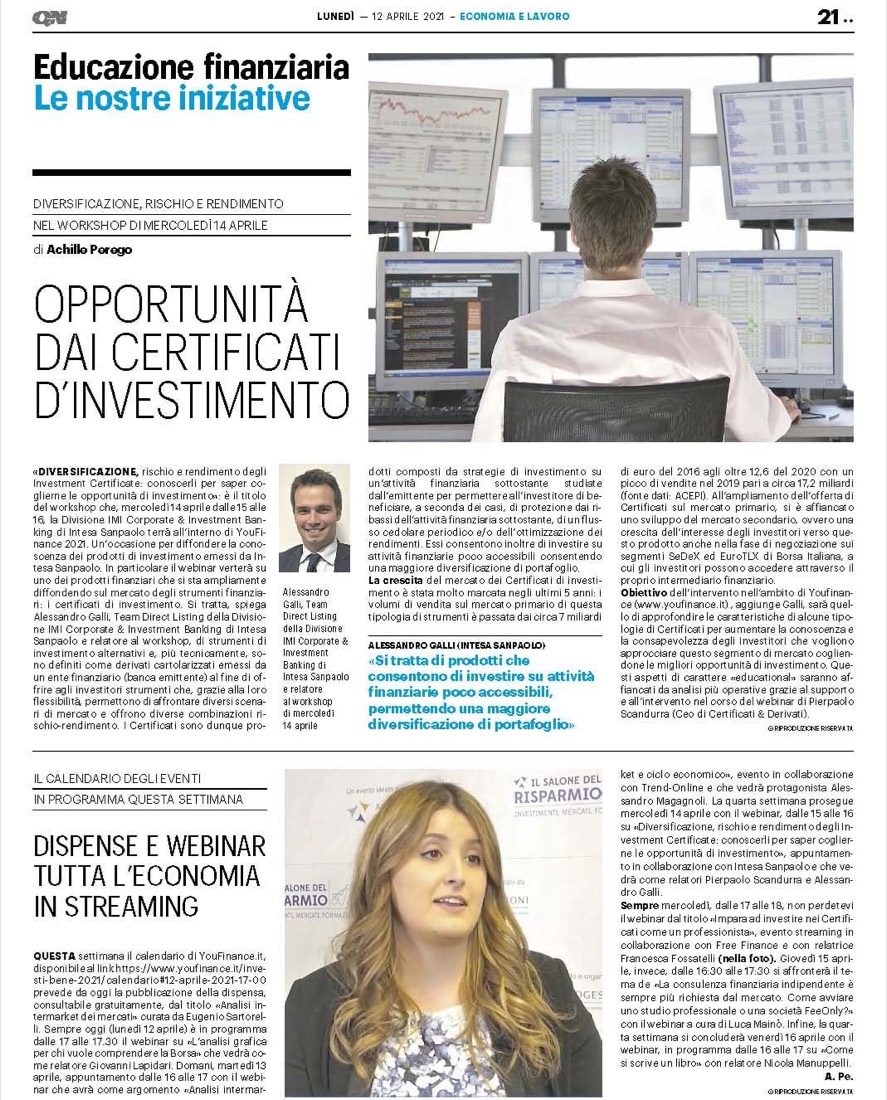
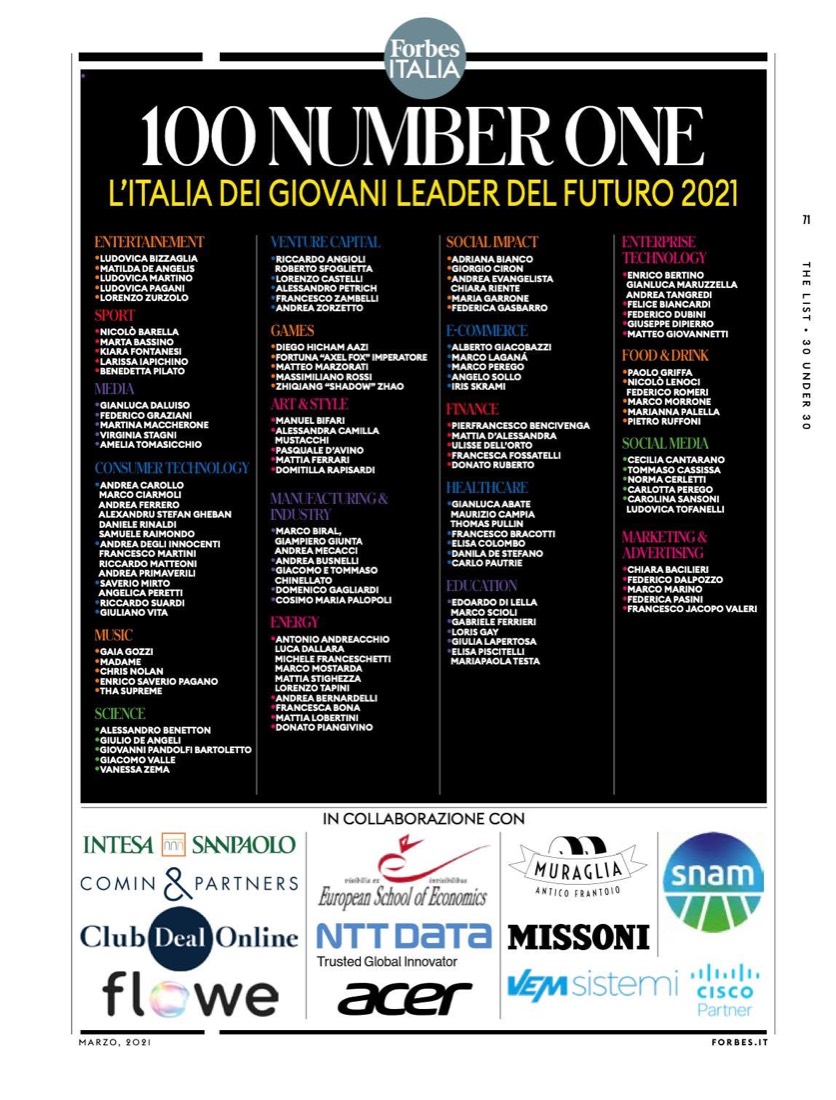
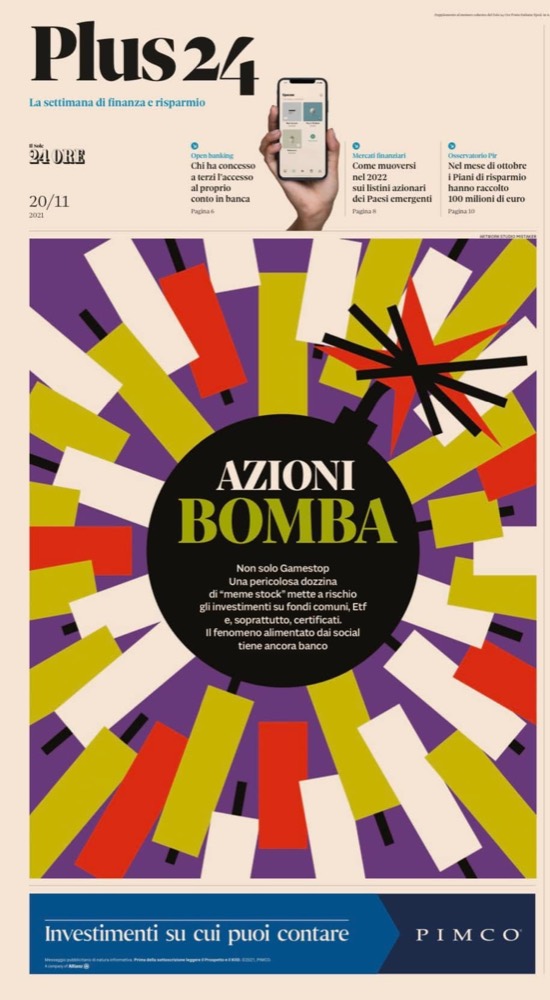
The reproduced pages belong to their respective publications and are shown as a press review.
My articles on FreeFinance
Only the articles under my byline, filtered by author from the freefinance.biz feed. There are more than 170 in the archive.
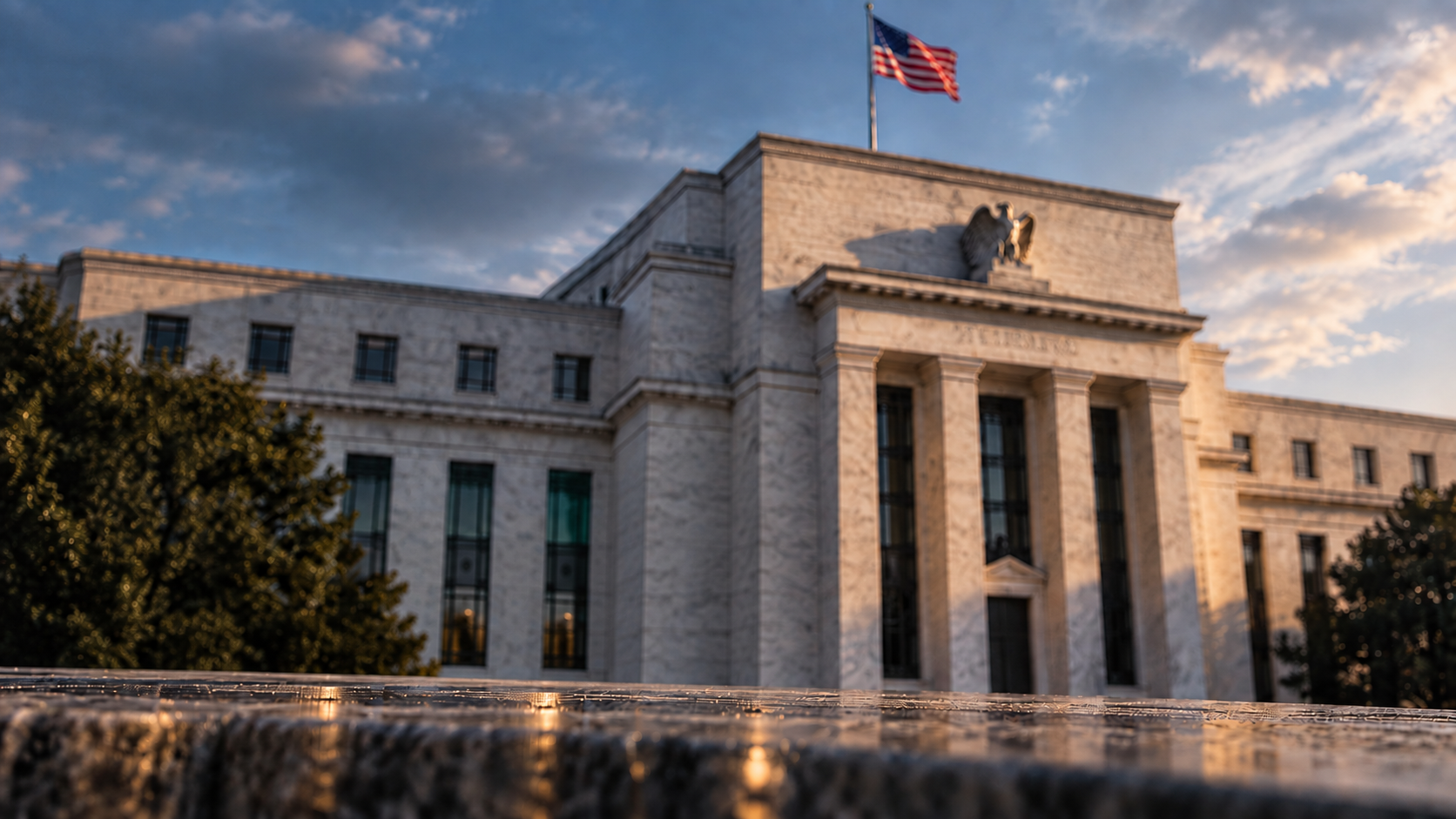 Fed: cosa ci portiamo a casa dalla riunione di ieri17 Sep 2026
 Aspettando la Fed: la view delle banche di investimento16 Sep 2026
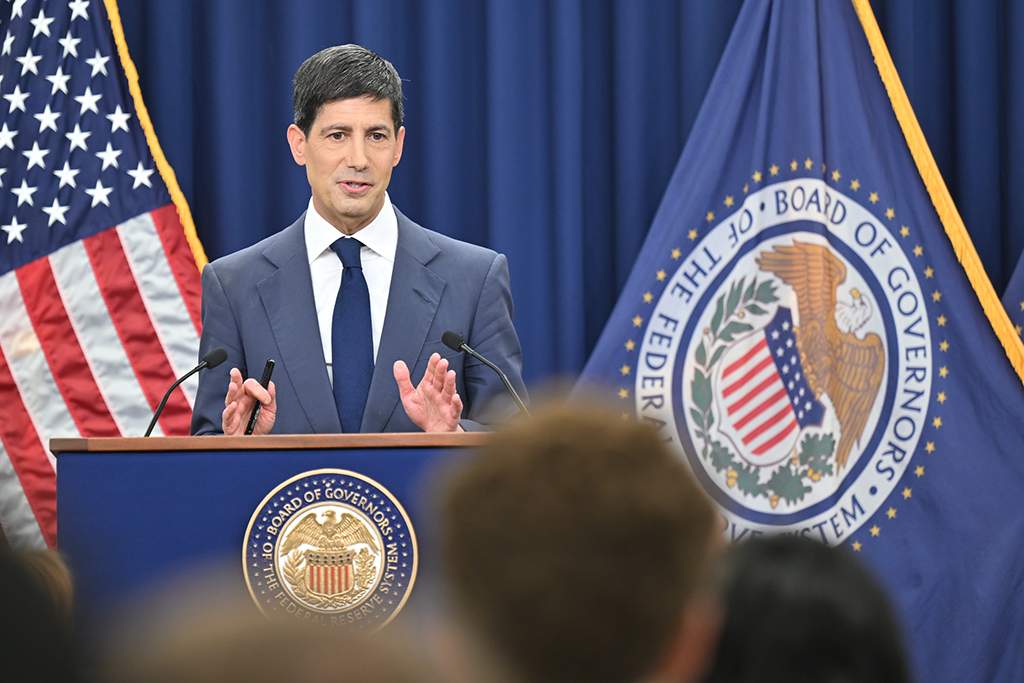 Warsh a Jackson Hole: l’analisi completa31 Aug 2026
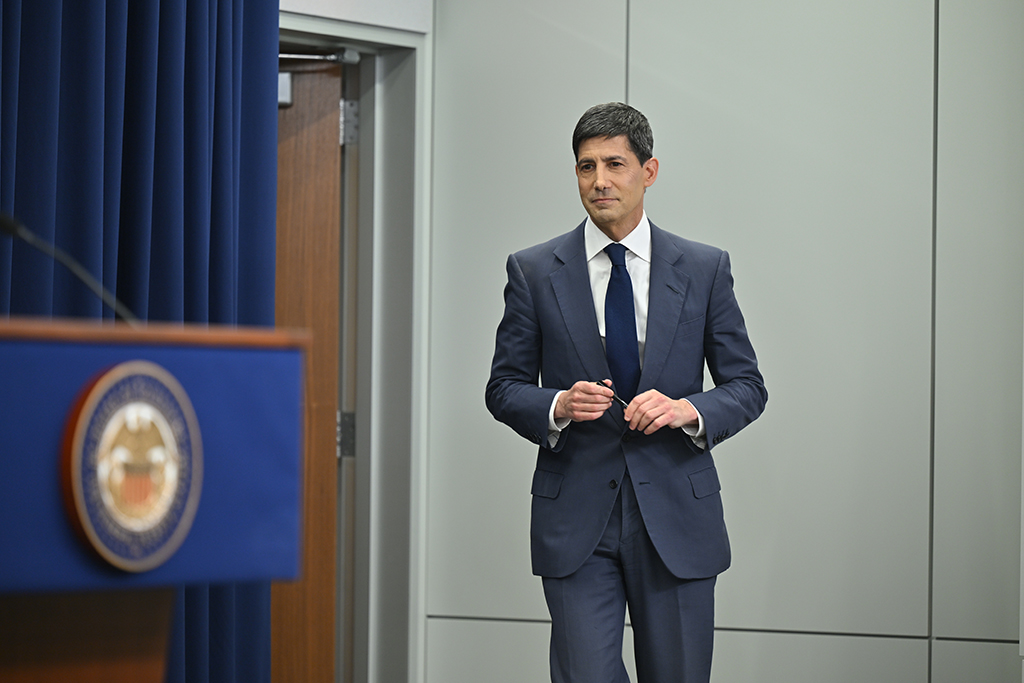 Cosa aspettarsi da Jackson Hole28 Aug 2026
 Moonshot e Kimi K3: la Cina accorcia il divario sull'AI di frontiera17 Jul 2026
 AI, capex e rischio: la lezione di Merton sugli hyperscaler21 May 2026
 Inflazione USA: cosa dice davvero il CPI di aprile12 May 2026
 Crisi Starmer: perché i GILT spaventano il Regno Unito12 May 2026
The questions I get asked most
Who is Francesca Fossatelli?
Why is her profile in certificates considered rare?
What are investment certificates, in plain words?
What is the "resilience" of a certificate?
What does a Chief Investment Officer do?
Are the portfolios public? Can they be verified?
What is FreeFinance PRO?
Does she give advice or trading signals?
How to reach me
Questions
For questions about my personal portfolio, my view and the content I publish on FreeFinance.
info@freefinance.bizQuestions about the platform
All registered users can send any question directly in the platform, in the Ticket section.
Open FreeFinance PRODexbridge Capital
For more information on Dexbridge Capital's advisory and wealth management services, ADGM, Abu Dhabi.
info@dexbridgecapital.com